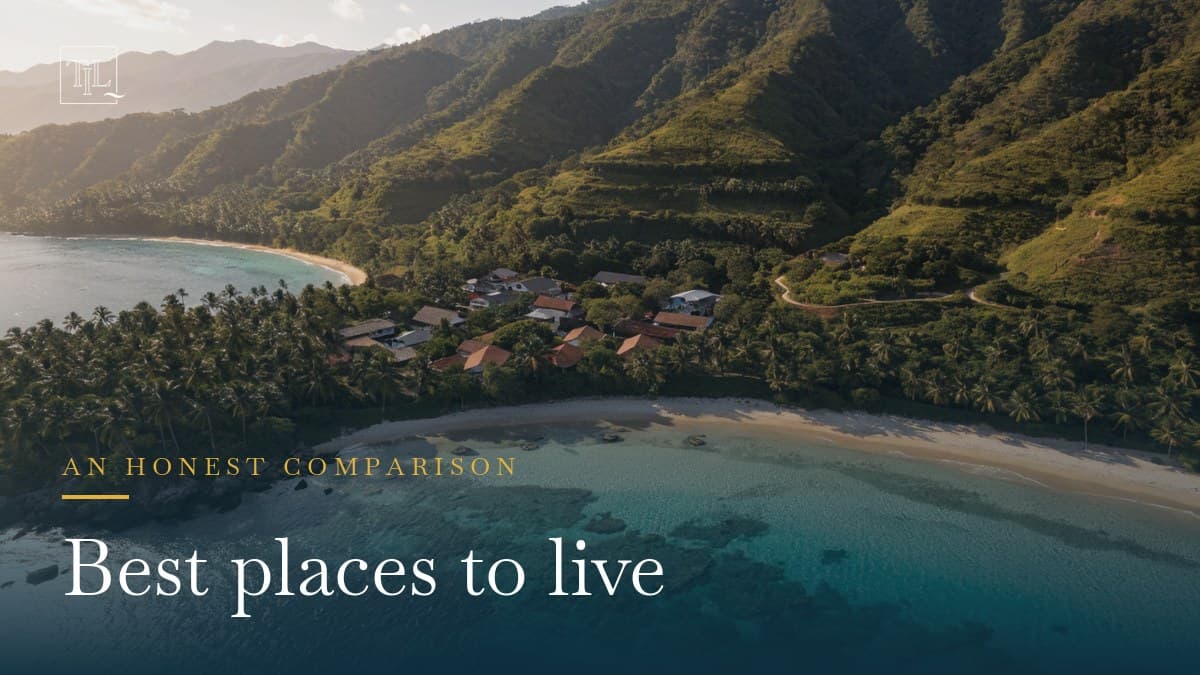
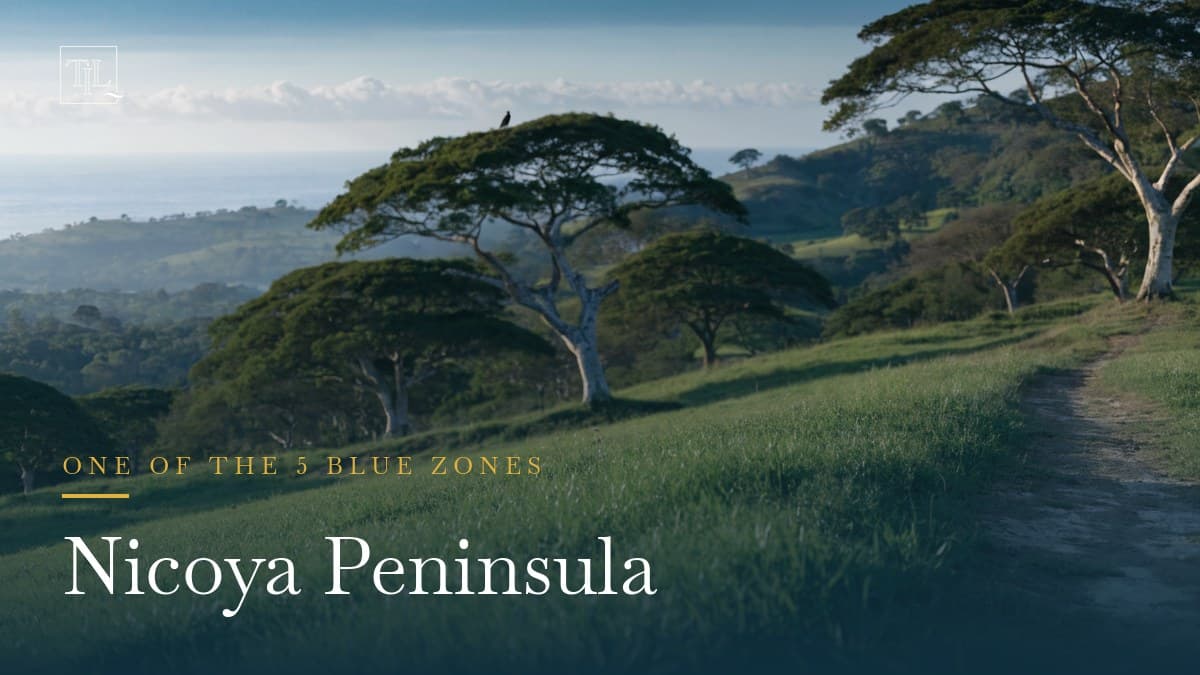
There are only five places on Earth where people live measurably longer than everywhere else — the famous “Blue Zones”. One of them is neither in Japan nor in the Mediterranean: it’s the Nicoya Peninsula in Costa Rica. In other words, the very territory where we sell homes. Here’s what that means in practice if you’re considering living — or buying — here.
What exactly is a “Blue Zone”?
The term comes from research popularized by Dan Buettner and a team of demographers: five regions of the world concentrate an exceptional share of people in great health past 90 — Okinawa (Japan), Sardinia (Italy), Ikaria (Greece), Loma Linda (California)… and the Nicoya Peninsula, where people reach 100 at a rate that has intrigued researchers for two decades.
It isn’t magic — and that’s precisely the interesting part: the identified factors are very concrete, and many of them “transfer” to anyone who adopts the local way of life.
Why do people live so long in Nicoya?
| Factor | In practice |
|---|---|
| The “plan de vida” | A reason to get up every morning — elders stay active and useful to the community very late in life |
| Social bonds | Close families, real neighborhoods — nobody ages alone |
| The local plate | Rice, black beans, squash, nixtamalized corn, garden fruit — simple, barely processed |
| Natural movement | Walking, gardening, swimming — exercise is part of life, not a subscription |
| Sun and rhythm | Year-round daylight, low stress, guilt-free siesta |
What living in the Blue Zone looks like
Day to day, the peninsula offers a life many North Americans and Europeans have lost: you buy fruit at the Saturday market, you know your neighbors, you swim before work, and “rush hour” means letting cattle cross. Villages like Sámara, Playa Carrillo and Nosara combine that authenticity with real services — schools, doctors, restaurants — and a welcoming international community.
The peninsula’s interior — Nicoya, Hojancha, Nandayure — remains the beating heart of the “historic” Blue Zone: fincas, green hills, cooler air, and some of Guanacaste’s gentlest prices per square meter.
What does it change for real estate?
Three very concrete things:
1. Demand that doesn’t fade. The Blue Zone label draws health-minded buyers from around the world year after year — a demand engine few beach regions have, supporting property values and long-term rentals.
2. A rare choice: beach OR hills. Within 30 minutes you go from ocean-view villas in Sámara and Nosara to altitude land in Hojancha. Two markets, two budgets, one living area.
3. A story that holds value. A home “in one of the world’s five Blue Zones” tells itself — to renters and to future buyers. For an investor, that’s durable marketing, not a fad.
Our advice
If your Costa Rica project is a life project — active retirement, family, remote work in the sun — the Nicoya Peninsula deserves the top of your list: it’s one of the rare places where a real estate investment and a health investment point in the same direction. Come walk the villages, taste the rhythm, and let’s talk about your project over coffee.