Dreaming of a life set to the rhythm of the Pacific, in an authentic village where you can walk barefoot to the bakery? Sámara is one of the few destinations in Guanacaste that combines a swimmable beach, a family-friendly setting and prices that are still reasonable. Before you buy a house in Sámara or a villa, here is our honest guide: the best neighborhoods, the 2026 price ranges and the pitfalls to know about.
Where is Sámara?
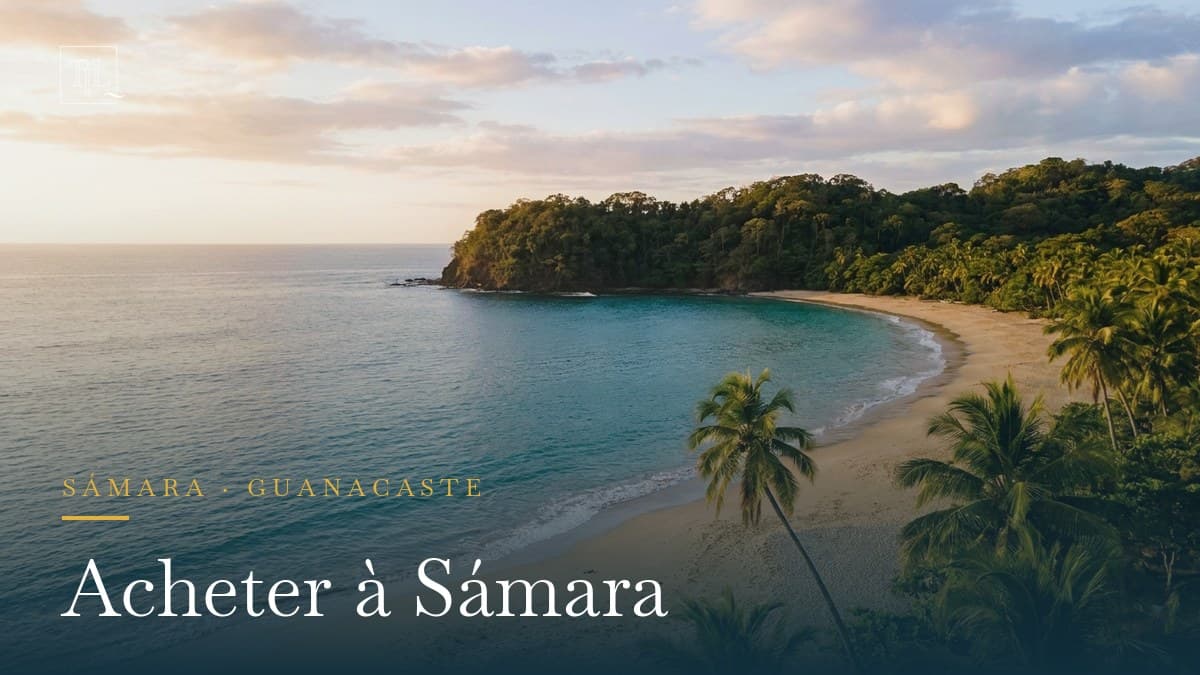
Sámara is a coastal village in the canton of Nicoya, in the province of Guanacaste, on the Pacific coast of the Nicoya Peninsula. Its crescent-shaped bay is protected by a reef and by the islet of Isla Chora: the result is calm, shallow and safe water, ideal for swimming, paddleboarding, kayaking and learning to surf. It is, without question, one of the most family-friendly beaches in the entire region.
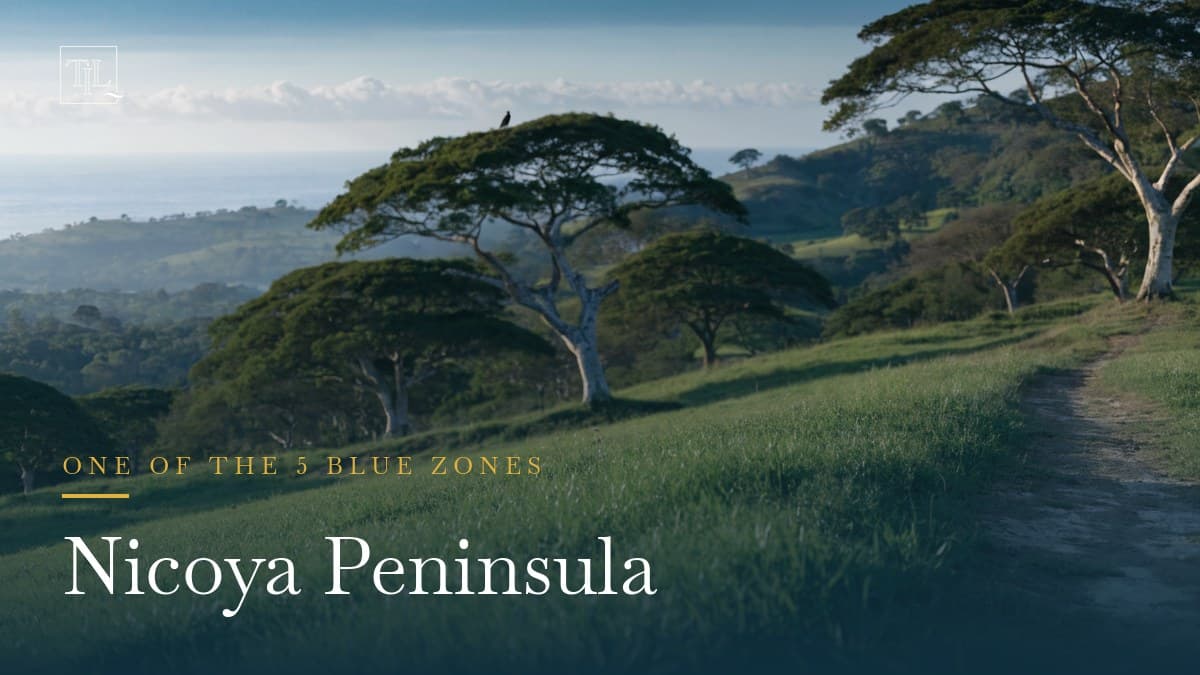
The icing on the cake: Sámara lies within the famous Nicoya “Blue Zone”, one of the few regions in the world where people live especially long and healthy lives. A compelling argument for anyone seeking not just a home, but a genuine way of life.
As for access, the main road (Route 150, which links Nicoya to Sámara and then to Carrillo) is paved and well maintained. Allow about 2 to 2.5 hours from Liberia International Airport (LIR) and 4.5 to 5 hours from San José (SJO). The nearest served domestic airfield is the one in Nosara. Note: the Carrillo airstrip, sometimes mentioned, is no longer in service — do not count on it when planning your journey.
Why buy in Sámara?
Unlike other seaside resorts in Guanacaste, Sámara has kept its “tico” soul. Few franchises, no large resorts: here the community blends locals and expats (Americans, Canadians, Europeans) in a relaxed, welcoming atmosphere. The village is walkable: within walking distance you will find supermarkets, banks, pharmacies, doctors, restaurants, yoga studios, high-speed internet and bilingual schools (such as Mareas Academy).
This rare mix makes Sámara an ideal destination for:
- families looking for a safe setting and quality schools;
- remote workers and digital nomads (reliable connection);
- investors targeting seasonal rentals, driven by families and long-term stays;
- retirees drawn to the Blue Zone lifestyle.
Good news for foreign buyers: in Costa Rica, you have the same rights as nationals over a titled property, and no residency requirement applies in order to buy.
Sámara’s neighborhoods and beaches
Real estate in Sámara comes in several very different flavors. Here is how we distinguish them to guide our clients.
Playa Sámara — the heart of the village
This is the beating heart: the main beach, village life and all the shops within walking distance. Perfect for those who want everything close at hand, with high rental potential thanks to the central location.
Playa Carrillo — the unspoiled postcard
Some 5 to 8 km to the south, this horseshoe-shaped, Blue Flag-certified bay remains almost pristine: no unchecked development, a rare tranquility lined with coconut palms. A useful clarification: administratively, Carrillo belongs to the neighboring canton of Hojancha.
Buena Vista, the hills and the communities
In the jungle-clad hills, around the estuary, ridgetop villas with ocean views are tucked away — more secluded, but spectacular. The Buena Vista / Playa Buenavista area, the heights of Santo Domingo and the residential communities (Samara Woods, El Canto de los Gavilanes, Sámara Reefs) appeal to those seeking nature, privacy and sweeping views.
Cangrejal and the neighboring beaches
The Cangrejal area rounds out the offering near the center. Nearby, nature lovers can explore Playa Camaronal (a wildlife refuge and turtle-nesting site, to the south) and Playa Barrigona, wild and reachable by 4×4.
Sámara real estate prices in 2026
Sámara’s great strength remains its positioning: it is more affordable than Tamarindo and Nosara. After the 2020-2023 boom, prices stabilized in 2026 and negotiation is back on the table. North American demand (United States, Canada) remains solid, appetite for land is clear, and transactions often close within 30 to 60 days.
Here are some ballpark figures (asking prices, to be read as “from” or “around,” and highly variable depending on location, view and the property’s condition):
| Property type | Indicative range (USD) |
|---|---|
| Condo / apartment | from ~$200,000 to $450,000 |
| Jungle / eco house (hills, inland) | ~$250,000 to $800,000 |
| Beachfront house | ~$550,000 to over $2M |
| Land — small inland lot | from ~$50,000 |
| Land — development parcel, ocean view | up to over $300,000 |
These amounts are exclusive of transaction costs. To build a realistic budget, read our detailed article on the cost of buying real estate in Costa Rica (fees and taxes).
The pitfalls to avoid in Sámara
Sámara is a little paradise, but buying calls for vigilance. Here are the points we systematically check for our clients.
The rainy season and road conditions
From May to November (peaking in September-October), the rains are generous. Many hill roads and secondary tracks are dirt: a 4×4 then becomes essential. Our advice: if you can, view a property on a rainy day to judge access and drainage.
Water — a check for every property
Electricity
Scheduled power outages remain possible. Many owners plan ahead by installing solar panels and backup batteries.
Beachfront: titled property or concession?
This is the legal point to master. In Costa Rica, the coastal strip falls under the Maritime Terrestrial Zone (ZMT): the first 200 meters from the high-tide line are regulated. The first 50 meters are public and cannot be built on; the next 150 meters fall under concession — in other words a lease, not full ownership, subject to restrictions for foreigners.
The good news: most of Sámara’s market (hills and inland) is titled property, secure and free of these constraints. Learn to tell the two regimes apart with our dedicated guide: maritime concession or titled property in Costa Rica.
Due diligence: don’t skip a single step
Before signing anything, work with an independent attorney who will verify: the title at the National Registry, the cadastral survey (plano catastrado), the absence of liens or disputes, and water availability. It is your best insurance against nasty surprises.
FAQ — Buying in Sámara
Is Sámara cheaper than Nosara or Tamarindo?
Yes. For comparable features, Sámara is generally more affordable than Nosara and Tamarindo, two markets whose prices have climbed sharply. It is one of the main reasons for its appeal in 2026.
Can you buy beachfront in Sámara?
Yes, but with care. The seafront often falls under concession (ZMT), a lease subject to restrictions for foreigners, whereas the majority of properties (hills, inland) are titled. Always have the exact status verified by an attorney before buying.
Can a foreigner buy without being a resident?
Yes. On a titled property, a foreigner has the same rights as a Costa Rican and does not need residency in order to buy.
Do you really need a 4×4 in Sámara?
For the village center and the main road, no. But for the hills and the secondary dirt tracks, especially during the rainy season, a 4×4 is strongly recommended.
Ready to take the next step? Browse our properties for sale in Sámara — houses, condos, villas and land — or contact our team for personalized support, from your search to signing.
The prices and information in this article are provided for indicative purposes only: they reflect ballpark figures observed on the Sámara market in early 2026 and vary according to location, view, the property’s condition and market trends. They must be verified on a case-by-case basis. This content constitutes neither legal nor tax advice. Always have due diligence carried out by an independent attorney and check the title at the National Registry before making any commitment. Tendance Immo Latina — your trilingual real estate agency in Costa Rica. See our properties in Sámara: tendanceimmolatina.com/en/properties/costa-rica/samara · Contact us: tendanceimmolatina.com/en/contact-us.