Three names keep coming up when you dream of buying on the Pacific coast of Costa Rica: Sámara, Nosara and Tamarindo. Three seaside villages, three radically different vibes, and above all three distinct life plans. Even before comparing prices, the real question is simple: what do you, personally, want from your future property?
All three localities are in Guanacaste, on the Pacific side. The first two belong to the Nicoya Peninsula (canton of Nicoya); the third lies a little further north (canton of Santa Cruz). They share an ideal climate, beautiful beaches and a well-established expat community. But the daily experience, the level of development, the ease of access and, above all, the prices vary greatly from one to another. This “Sámara vs Nosara vs Tamarindo” comparison helps you match each area to a specific buyer profile, in all honesty: each has its strengths and its trade-offs.
The comparison at a glance
| Criterion | Sámara | Nosara | Tamarindo |
|---|---|---|---|
| Vibe | Calm, family-friendly bay, authentic tico village, Blue Zone | Surf, yoga and wellness, affluent international community, Blue Zone | Lively seaside resort, very touristy, nightlife |
| Development | Moderate, human-scale, walkable | Controlled, protective planning, scarce land supply | Highly developed, full infrastructure |
| Access from LIR | ~2 to 2.5 hrs, paved road | ~2 to 2.5 hrs, difficult roads (4×4) + small airport | ~68 km, ~1 hr 15 to 1 hr 30, no dirt road |
| Price range (indicative) | The most affordable: condos ~$200-450k, houses ~$250-800k | Among the most expensive: houses from ~$300k, condos ~$500k-$2.5M | Median house ~$520k, entry condos ~$180-320k |
| Ideal profile | Families, retirees, remote workers, measured budget | Surf/yoga/wellness, premium buyers, high-end rentals | Amenities, buzz, quick access, liquid rentals |
| Watch out for | Narrower market, fewer services than Tamarindo | Demanding road access, high prices, strict building rules | Crowds in high season, market rebalancing |
These ranges are ballpark figures, based on asking prices, and serve only to position each area relative to the others. Let’s now get into the detail, locality by locality.
Sámara: the safe bet for families and measured budgets
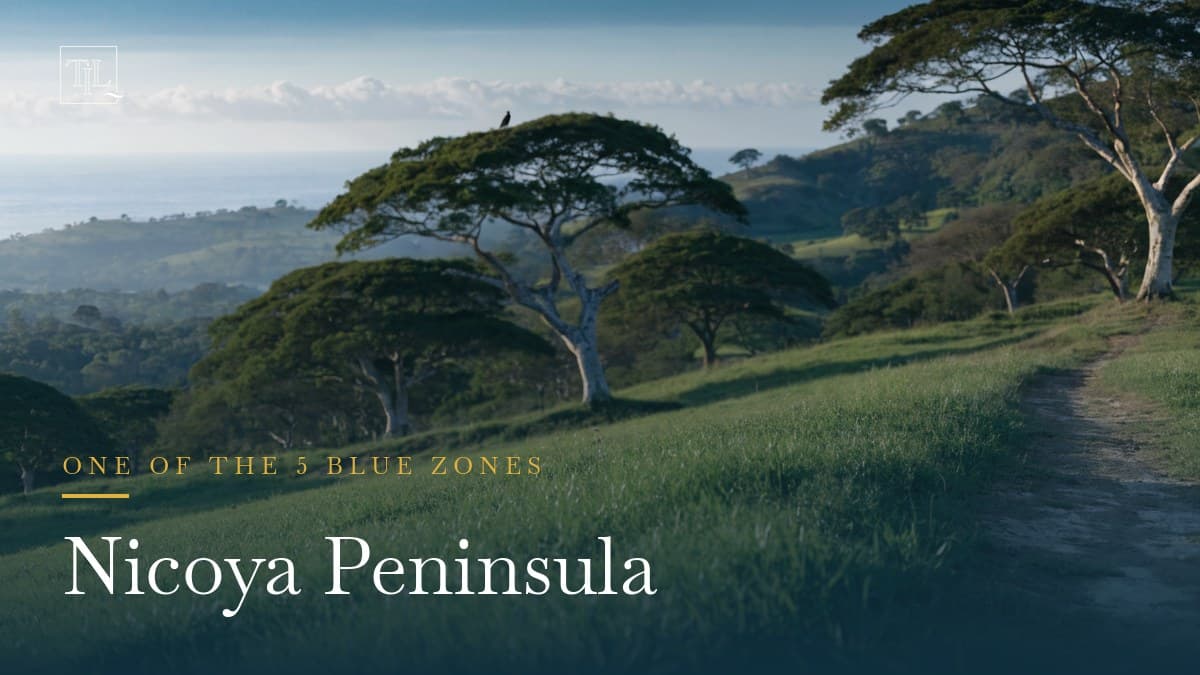
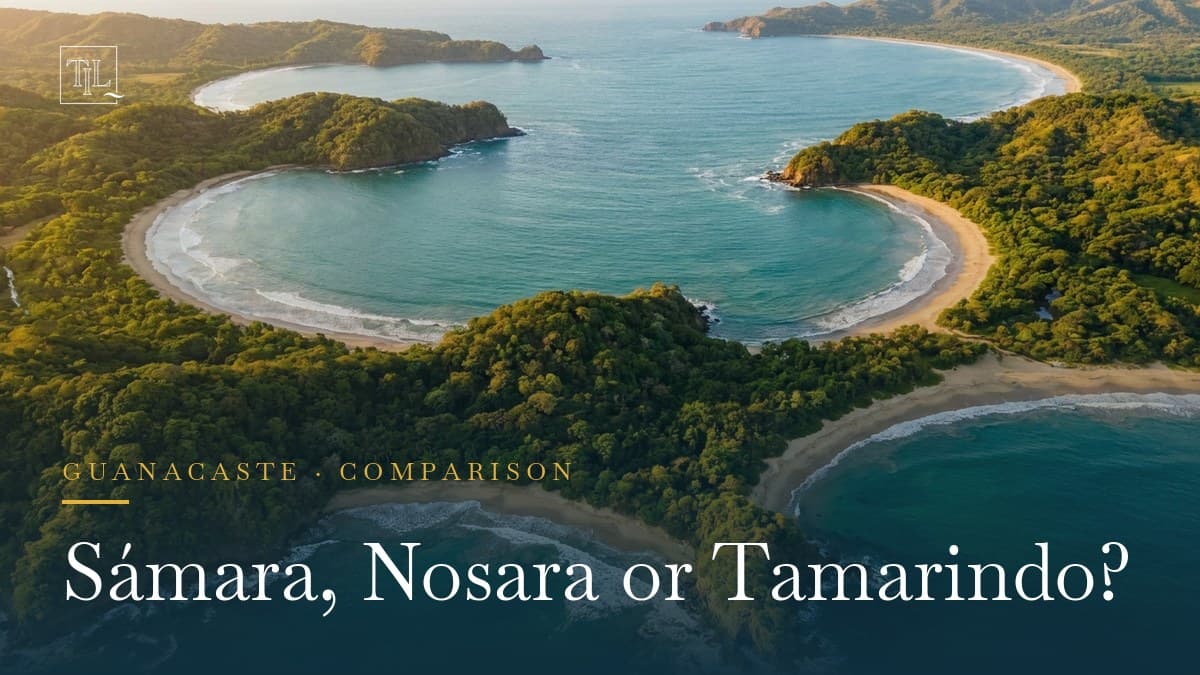
Nestled in a bay protected by a reef and the small Isla Chora, Sámara offers calm water, limited currents and a beach where families feel immediately safe. It is probably the most “tico” of the three villages: you get around on foot, you cross paths with as many Costa Ricans as foreigners, and the atmosphere remains that of an authentic coastal town rather than a tourist resort. Sámara also belongs to one of the famous Blue Zones of the Nicoya Peninsula, those regions renowned for the longevity of their inhabitants.
As for access, allow about 2 to 2.5 hours from Liberia International Airport (LIR), on a road that is now paved: a real comfort compared with some of its neighbors.
It is also the most affordable of the three. As a guide, you’ll find condos at around $200,000 to $450,000, jungle-edge houses from $250,000 to $800,000, beachfront properties from $550,000 to over $2M, and land from $50,000 to over $300,000.
For whom? Families, retirees, remote workers and, more broadly, anyone looking for a quiet life on a measured budget. The trade-off: fewer services and a narrower market than Tamarindo. Browse the properties for sale in Sámara.
Nosara: the temple of surf and wellness, premium edition
Nosara is the benchmark for surf and wellness in Costa Rica. Around Guiones beach, an affluent international community has grown up to the rhythm of early-morning surf sessions and yoga studios. Here too you are in a Blue Zone, but the positioning is clearly premium and wellness-oriented.
Nosara’s big distinctive feature is its protective planning: no construction is allowed on the sand at Guiones, the vegetation is preserved and building rules are strict. The Ostional buffer zone, tied to protecting turtle nesting, was in fact upheld by the Supreme Court in 2026. The result: a remarkably well-preserved natural setting, but a scarce — and mechanically expensive — land supply.
Access remains a compromise: about 2 to 2.5 hours from Liberia, but on difficult roads that often call for a 4×4. A small airport, served by Sansa/Green Airways, does however save time.
Prices are among the highest on the coast. As a guide: houses from around $300,000, luxury properties in gated communities from $550,000, high-end from $850,000, and condos from $500,000 to $2.5M. Wellness and surf rental demand is strong here, which supports values.
For whom? Surf, yoga and wellness enthusiasts, premium buyers and investors targeting high-end rentals. The trade-off: high prices and demanding road access. Explore the properties for sale in Nosara.
Tamarindo: amenities, buzz and easy access
Tamarindo is the most developed and most lively of the three. A genuine seaside resort and surf capital, it concentrates restaurants, shops, surf schools, nightlife and an international presence so pronounced that it is sometimes nicknamed “Tamagringo.” Full infrastructure also means day-to-day comfort: here, nothing is missing.
Its major asset is access: about 68 km and 1 hr 15 to 1 hr 30 from Liberia airport, on a fully paved road, with no dirt track. That is a decisive argument for short-term rentals as well as for frequent round trips.
On 2026 prices (indicative, based on asking prices): the median house sits at around $520,000, the average at around $820,000, or roughly $2,900 to $3,400/m². The average condo hovers around $465,000, while the very top end, in Langosta or Hacienda Pinilla, climbs from $1.8M to $4.5M. Good news for tighter budgets: a realistic entry point exists at around $180,000 to $320,000 via older condos in Villareal or Huacas. After several years of boom, the market is now rebalancing, and negotiation is more open here.
For whom? Those who want amenities, buzz, quick airport access and a property that is easy to rent. The condo is often the ideal entry point here, with good liquidity on resale. The trade-off: crowds in high season and a distinctly more touristy atmosphere.
So, which one to choose?
There is no “best” area in absolute terms, only the one that fits your project. To decide, start from your priorities rather than a simple price per square meter:
- Quiet family life on a controlled budget? Sámara is your best candidate. The trade-off: fewer services and a narrower market than Tamarindo.
- Surf, yoga, wellness and a premium property? Nosara ticks all the boxes, especially for high-end rentals. The trade-off: high prices and difficult road access.
- Amenities, buzz, quick access and a liquid rental investment? Tamarindo stands out, with the condo as the entry point. The trade-off: crowds in high season and a very touristy atmosphere.
In other words, the right choice depends on the weight you give to peace and quiet, budget, access and rental potential. A retired couple seeking serenity won’t target the same locality as an investor looking to rent easily all year round. Our role is precisely to help you match your project with the area that resembles it.
Frequently asked questions
Which is the cheapest of the three?
Sámara. It is the most affordable area, with indicative condos from around $200,000 and land from $50,000. Tamarindo also offers interesting entry points, around $180,000 to $320,000, via older condos in Villareal or Huacas. Nosara, for its part, remains among the most expensive on the coast.
Which to choose for a first rental investment?
For a first investment, Tamarindo is often the most reassuring choice: the market is deep, access from Liberia is quick, and the condo is an entry point with good resale liquidity. Nosara aims more at high-end rentals, driven by strong wellness and surf demand, but with noticeably higher entry tickets.
Do you have to be a resident to buy in Costa Rica?
No. Foreigners buy titled property with the same rights as Costa Ricans, with no residency requirement. Only seafront properties falling under the ZMT are subject to specific concession rules, which should be verified on a case-by-case basis.
Are the quoted prices firm?
No, they are ballpark figures, based on asking prices that vary according to location, the property’s condition and the view. Negotiation is common, often on the order of 6 to 12%. For an estimate tailored to your project, contact our team.
The prices and information in this article are provided for purely indicative purposes (ballpark figures, asking prices at the time of writing) and change regularly. They constitute neither legal advice, nor tax or investment advice. Any real estate transaction in Costa Rica should be verified with a qualified professional (attorney, notary, real estate agent). Tendance Immo Latina is at your disposal to support you in your project.